NHTSA Header Logo NHTSA Header Logo
Home Traffic Safety Vehicles & Equipment Laws & Regulations NCSA Vehicle Safety Research
What's New:
Quick Clicks
Nationwide traffic safety events

Latest studies and reports

Current research in progress

Highway safety programs and grants

Fuel Economy Standards (CAFE)

Recalls, defects, and complaints

File a complaint about your vehicle
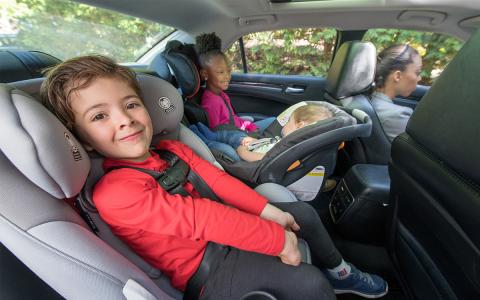
 or child safety seat


Child Passenger Safety: seat ratings,
 inspection stations, LATCH, and more.


Teen Drivers:  a comprehensive
 approach to teen driver safety


NHTSA Press Room

About NHTSA

Contact NHTSA

Subscribe to NHTSA email alerts
Top Stories
Motorcoach Safety Action Plan Released by DOT

The Motorcoach Safety Action Plan lays out concrete steps for improving motorcoach safety across the board, addressing major issues such as driver fatigue and inattention, vehicle rollover, occupant ejections and oversight of unsafe carriers. “We are committed to making sure that bus travelers reach their destinations safely,” said Transportation Secretary Ray LaHood today. “These improvements will not only help reduce the number of motorcoach crashes, it will also help save lives and reduce injuries.” While motorcoach travel is a very safe mode of transportation in the U.S., carrying 750 million passengers annually, an average of 19 motorcoach occupants are killed in crashes each year according to data collected by NHTSA. More fatalities result among pedestrians, and occupants of other vehicles involved in these crashes.
News Release l Read the Action Plan


NHTSA Announces Record Low Traffic Fatalities to Start 2009

Traffic deaths on U.S. roads reached a record low in the first half of 2009, according to projections released Oct. 9. Estimates show that 16,626 people died in traffic crashes between January and June –- a 7 percent decline from 17,871 for the same period last year. Projected figures for the period also show a record low fatality rate of 1.15 deaths per 100 million vehicle miles traveled, down from 1.23 deaths during the same period in 2008.
Read the Report


New Research Finds Increase in Use of Hand-Held Devices Among All Drivers

Kicking off a two-day Distracted Driving Summit that will highlight the under-recognized dangers of distracted behavior behind the wheel, DOT Secretary Ray LaHood announced new research findings by NHTSA that show nearly 6,000 people died in 2008 in crashes involving a distracted or inattentive driver, and more than half a million were injured. On any given day in 2008, more than 800,000 vehicles were driven by someone using a hand-held cell phone. “Every single time someone takes their eyes or their focus off the road - even for just a few seconds - they put their lives and the lives of others in danger,” said Secretary LaHood Sept. 30 in Washington, D.C. “Distracted driving is unsafe, irresponsible and in a split second, its consequences can be devastating.”
News Release l Examination of Driver Distraction
Driver Electronic Device Use in 2008 Research Note
Additional NHTSA Research and Reports on Driver Distraction, Including Cell Phone Use


Seat Belt Use Nationwide Reaches 84 percent
A new report shows that seat belt use nationally has hit a record high of 84 percent. To view the new NHTSA research, click here.


National Program to Improve Fuel Economy and Reduce Greenhouse Gases Proposed
The Department of Transportation and the Environmental Protection Agency today jointly proposed a rule establishing a historic national program that would improve vehicle fuel economy and reduce greenhouse gases. Under the proposed program, which covers model years 2012 through 2016, automobile manufacturers would be able to build a single, light-duty national fleet that satisfies all federal requirements as well as the standards of California and other states.
News Release l Complete Details on NHTSA's CAFE Page


"Wildly Successful" Cash for Clunkers Wraps Up with Nearly 700,000 Car Sales, Increased Fuel Efficiency
The CARS program closed with nearly 700,000 clunkers taken off the roads, replaced by far more fuel-efficient vehicles. Rebate applications worth $2.877 billion were submitted by the Aug. 25 deadline, under the $3 billion provided by Congress. Cars made in America topped the most-purchased list, from the Ford Focus to the Toyota Corolla to the Honda Civic. The program also was good for the environment. Eighty-four percent of consumers traded in trucks and 59% purchased passenger cars. The average fuel economy of trade-in vehicles was 15.8 mpg and the average of purchased vehicles is 24.9 mpg -– a 58% improvement. “American consumers and workers were the clear winners thanks to the cash for clunkers program,” said Transportation Secretary Ray LaHood. “Manufacturing plants have added shifts and recalled workers. Moribund showrooms were brought back to life and consumers bought fuel efficient cars that will save them money and improve the environment.”
News Release l CARS Program Statistics i Visit cars.gov to Learn More


What's New, Latest Updates and Features on Our Site
feature arrow icon Overall Traffic Fatalities Reach Record Low in 2008
feature arrow icon Tough New Braking Rules For Large Trucks Issued
feature arrow icon New Tire Fuel Efficiency Ratings Proposed
feature arrow icon An Examination of the Criticisms of the Minimum Legal Drinking Age 21 Laws in the U.S. from a Traffic-Safety Perspective
feature arrow icon New Data Show Drinking Age Laws Saved 4,441 Lives Over 5 Years
More ...
Share your Traffic Safety ideas with us
Comment on NHTSA's 2010-2015 draft strategic plan

File a complaint File A
Complaint

If you believe there is a safety-related problem with your vehicle or child seat

SaferCar.gov
How Safe is Your Car?
-Report a Vehicle Defect
-Crash & Rollover Ratings
-Recall Information

StopImpairedDriving.org
Information and resources to fight drunk and drugged driving

4 Steps For Kids
How to keep your littlest passengers safe
U.S. Department of Transportation USA Gov - Your First Click to the U.S. Government